

Pub jukeboxes
Jukeboxes used to be part of a pub’s furniture; as crucial to the pub experience as pickled eggs or pork scratchings. But they have become a rare sight in our drinking establishments. What happened?

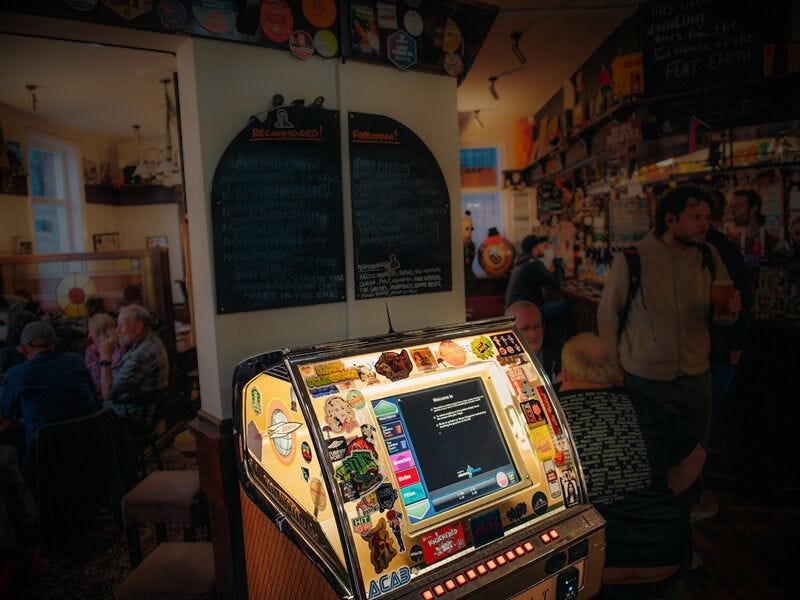
The first thing you notice when you walk through the doors of The Rutland Arms in Sheffield isn’t the scent of stout or the smell of pub grub, but a big metallic box in the centre of the room. And it holds a kind of mystical power over the punters here. Every few minutes someone sidles up to it, pokes some buttons, swipes a card, and then fills the room with the sound of anything from Miley Cyrus to Megadeth. This process seems to repeat itself endlessly, despite the pub only being half-full.
Given its popularity here, you’d think the jukebox in The Rutland would be replicated at pubs up and down the country. And for many years, it would have been. But recent years have slowly seen the disappearance of jukeboxes from our pubs, replaced instead with generic Spotify playlists, the hum of 24-hour news channels or simply Spoons-esque silence.
This vague feeling of loss is supported by cold, hard numbers. Toby Hoyt, managing director of the biggest jukebox provider in the UK, recently told The Lock In podcast that his company supplied 15,000 digital jukeboxes across the UK in 2015. Now, they supply about 10,000: a 33% drop in the past 10 years.
Yet the reasons behind the jukebox’s fall from grace are unclear. It’s all the more strange given the influential role they’ve played in British culture over the years.
Jukeboxes first started appearing in the UK in the mid-to-late 1940s, originally as a kind of niche fascination in amusement arcades and fairgrounds. In the immediate post-war years they were still a rare sight; there were thought to be less than 100 jukeboxes in Britain in 1945.
From these slow beginnings, jukeboxes became really popular, really quickly. By 1958, it’s estimated that there were more than 13,000 of them across the country. But it wasn’t pubs that propelled this early boom. It can instead be put down to another cultural phenomenon that was sweeping the UK: milk bars.
A kind of proto-dessert parlour, milk bars served milkshakes, coffees and desserts to a predominantly teenage clientele who couldn’t get served in pubs. Though they weren’t exactly a new thing - the first milk bar in the UK opened in 1935 and by 1938 there were more than 1,000 - in the 1950s they established themselves as the main meeting point and hangout spot for young people. That’s in large part down to the presence of jukeboxes in them.
A Guardian article from 1956 outlines how important jukeboxes quickly became to milk bars. “Mr Stanley Morris, a Manchester manufacturer, has a revealing story about his first “placing,” reads the report. “He selected a small milk bar which was clearly suffering from the competition of three more imposing establishments near by, and lent its owner a juke-box on specially favourable financial terms. Within a few months the rivals had all asked for machines to win back some of their lost customers.”
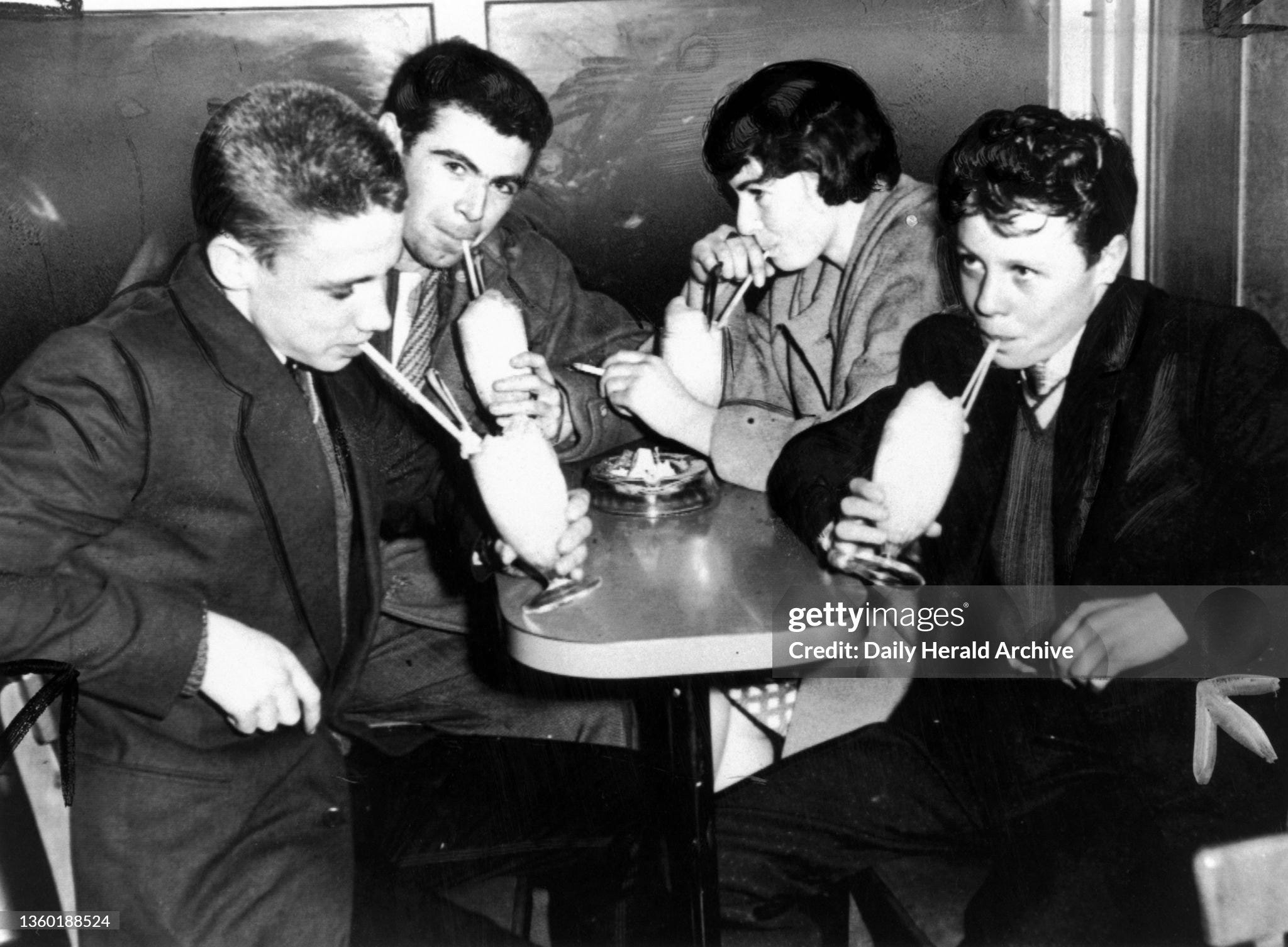
In fact, milk and coffee bars reached such a level of prominence that they were said to have triggered a youth revolution in 50s Britain. “Along with the growth of milk and coffee bars, the jukebox gave teenagers an ‘escape’ from the parental gaze and a freedom to explore their own tastes in music, fashion and styles,” explains the team behind Jukebox: The Teenage Revolution, a joint project between Mirador Arts and Lancaster University. The project highlighted the importance of jukeboxes to the growth of youth culture and the social phenomenon of coffee and milk bars.
According to the project website, jukeboxes also played an important role in spreading musical awareness throughout the country’s teens. “Jukeboxes were an important catalyst because they disseminated American music by bypassing the BBC’s near monopoly broadcasting position. Jukeboxes in this instance played a remarkably similar role to those in pre-war America, where jukeboxes circumvented racist restrictions imposed by commercial radio stations.”
Jukeboxes became so popular during this period that record companies started to send the first pressing of a new single directly to jukebox operators. They acted as a sort of market-testing device for the big record labels, since they could see how many times each song on a jukebox had been played.
At this point, they were also the only way that most people could listen to their own music outside their home. The Sony Walkman was still 30 years away, and the iPod wasn’t even a glint in the eye.
Throughout the 1950s, pubs had largely resisted the jukebox craze. They often refused to get on board with youth-led trends like this, with young people looking upon pubs with similarly cynical eyes. But as the milk bar craze slowly died out in the 1960s (largely replaced by coffee or espresso bars), jukeboxes started to become widespread in pubs. Indeed, by the end of the decade they were pivotal to the pub experience.
Back then, many pubs were defined by their jukebox. Because this was the age of physical jukeboxes, each one would have had its own selection of vinyl records chosen by the landlord. You could pick a song, but only within certain parameters set out by that pub. It gave each pub a distinct personality that drew certain crowds in.
It means that if you wanted to hear a specific artist when you were out, you had to find a pub that had them on the jukebox. In Sheffield, The Nelson was said to be the place for hard rock like Led Zep and Deep Purple. The Sportsman was a little more proggy; think Pink Floyd and Genesis. Meanwhile, The Elephant Inn was a refuge for Irish immigrants to listen to music from their own shores. Similar scenarios would have played out in countless other UK cities at the time.
For many people, the pub jukebox wasn’t just a metallic box in the corner of a dark pub - it acted as a gateway into new music and new communities. The jukebox helped you find your own people.
After the explosion of the pub jukebox in the 60s and 70s, operators introduced new innovations over the years to keep patrons interested.
The first of those was the video jukebox, which started appearing in pubs in the 1980s. Instead of just hearing the audio from a track, you’d be able to watch an accompanying music video for the song you had selected. When these jukeboxes were first introduced into pubs, they cost 50p for two plays (£1.80 in today’s money) and led to plenty of moral wrangling over whether or not they would kill pub conversation.
Source: BBC Facebook
Though video jukeboxes proved to be a bit of a passing fad, jukeboxes have generally been able to keep pace with technological change in the music industry. CD jukeboxes slowly started to replace vinyl versions in the 90s, before digital took hold in the 00s. This shift to digital certainly didn’t mark the start of the jukebox’s decline - you could argue they were part of the pub furniture right up until the 2010s.
However, the sight of a pub jukebox has gradually become rarer and rarer in recent years. According to a 2025 survey, 27% of Brits now believe that they are out of date, placing them alongside former pub staples like pickled eggs, fruit machines and pork scratchings.
Anecdotally, they now appear to be more common in smaller towns and villages, where the pace of life and speed of change isn’t quite as quick. They also seem to be more common in traditional pubs that are community-run or wet-led. Their decline appears to be sharpest in larger urban areas - Hoyt notes that Touch Tune supplies fewer jukeboxes to London than any other region.
There’s no obvious reason why jukeboxes are dying this slow death. They haven’t been replaced by anything in particular, nor have they been left behind by technological advances - the vast majority of jukeboxes will allow you to pay by card or via an app. And it’s not like most pubs opt for silence instead. Music remains a big part of the pub experience.
“Modern pubs want predictability, organisation and control. Jukeboxes - those big, glorious agents of chaos - offer none of those things.”
The jukebox’s decline is all the more mystifying given its many benefits. For one, it gives people a chance to set the atmosphere in the pub. They feel like they have a say in what’s going on, and aren’t at the behest of whatever the staff are choosing to play over the loudspeakers.
They also bring people together. When a song comes on the jukebox, tell me you don’t have a quick scan of the pub to see if you can figure out who put it on. Similarly, when you put a song on, I know you’re looking around to gauge people’s reactions. These kinds of moments can strike up welcome interactions with strangers and give us a chance to leave our silos, if only for a few moments.
Importantly, jukeboxes make money as well. Estimates on the exact amount vary, but one jukebox provider claims their machine in a central Liverpool pub makes more than £150 every week. It’s not earth-shattering, but it’s not nothing (£150 a week equates to £7,800 a year). And the income more than covers the not-insignificant PRS fees that pubs have to pay every time they play a song.
Still, jukeboxes are far from perfect. Though The Rutland’s jukebox is something of an icon in Sheffield, it does have a list of banned music above and a jerry-rigged skip button behind the bar. It suggests that turning over the power of music choice to a pub’s clientele isn’t always the best idea. Maybe there’s always going to be someone who plays ‘The Boys Are Back In Town’ until they get kicked out, or empties their wallet playing ‘I’m a Barbie Girl’ on repeat. Given such situations, landlords may simply prefer to play their own music in their own pub.
Their decline may also be down to the shifting priorities of modern day pubs. Faced with increasing costs and shrinking revenues, pubs want to know how long you’re going to be there and how much money you’re going to spend. They want to optimise that process as much as possible. They want you to reserve your table online, pay via the app and leave promptly when you’re done. They want predictability, organisation and control. Jukeboxes - those big, glorious agents of chaos - offer none of those things.
Whether the decline of the jukebox is a terminal one remains to be seen. But the next time you happen across one in a pub, it’s worth remembering the role that this big metallic box has played in our country’s culture. So swipe a card, tap your app or stick a quid in - because you may not be able to do it for much longer.